Empty Space Is the Point: What Japanese 'Ma' Taught Me About Decorating My Home
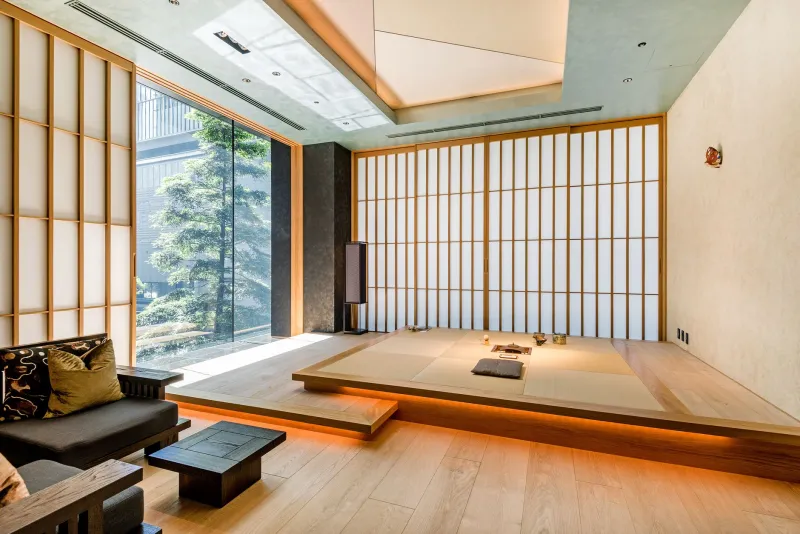
There's a moment that happens to a lot of us. You've just finished rearranging your living room for the third time this year — new throw pillows, a gallery wall, a couple of plants you optimistically named — and somehow the space still feels... heavy. Crowded. Like the room itself is a little stressed out.
I had that moment last spring. And weirdly, the thing that helped me understand it wasn't a home design podcast or a scroll through Pinterest. It was learning about a Japanese concept called ma.
So What Exactly Is Ma?
Pronounced like the first syllable of "mama," ma (間) is a Japanese word that roughly translates to "negative space" or "pause" — but that translation barely scratches the surface. In Japanese aesthetics, ma isn't just about the absence of stuff. It's about the meaning of that absence.
Think of it like the silence between notes in a song. Without those pauses, music would just be noise. Ma is the idea that empty space has its own presence, its own purpose. It's not a gap waiting to be filled — it's an active, intentional part of the whole.
The concept shows up everywhere in Japanese culture: in architecture, in the pacing of a tea ceremony, in the way a single branch of cherry blossoms might be arranged in a vase with nothing else around it. The emptiness is the art.
Now contrast that with the typical American approach to interior design, where empty wall space practically screams "I haven't finished decorating yet." We're a maximalist culture by default. Bigger is better. More is more. And honestly? Our homes — and our nervous systems — are paying for it.
Why Your Cluttered Space Is Stressing You Out
This isn't just vibes. Research from Princeton's Neuroscience Institute found that visual clutter competes for your brain's attention, making it harder to focus and easier to feel overwhelmed. A study published in Personality and Social Psychology Bulletin linked cluttered home environments to elevated cortisol levels — the stress hormone — particularly in women.
In other words, all that stuff you've accumulated isn't just taking up physical space. It's taking up mental bandwidth.
Ma offers a different philosophy: that a well-placed empty corner can do more for a room than another bookshelf ever could.
Bringing Ma Into Your Living Room
You don't have to gut your entire house and move into a minimalist white cube to apply this principle. Ma is less about a specific aesthetic and more about a shift in mindset — the idea that you're choosing what stays, and that choice is deliberate.
Start with one surface. A coffee table, a console table, a nightstand. Clear everything off it. Then, instead of putting it all back, ask yourself: what does this surface actually need? Maybe one object — a small ceramic bowl, a single candle, a book you're currently reading. Leave the rest.
Notice how the space around that object changes the object itself. It gets to breathe. You actually see it.
For your living room, try pulling furniture slightly away from the walls rather than pushing everything to the perimeter (a common American instinct). Leave some floor visible. Let the room have a center of gravity instead of a perimeter.
The Bedroom: Your Most Important Ma Experiment
If there's one room where ma can genuinely change your quality of life, it's the bedroom. American bedrooms tend to become catch-all zones — laundry chairs, charging stations, work laptops, stacks of half-read books.
Japanese bedroom design, especially in the tradition of washitsu (traditional tatami rooms), treats the sleeping space as something almost sacred. The idea is that the room should signal rest to your brain the moment you walk in.
Try this: remove everything from your bedroom that isn't directly related to sleep or getting dressed. Every piece of exercise equipment, every work item, every decorative object that doesn't bring you genuine calm. You don't have to throw it out — just relocate it.
What you're left with might feel sparse at first. That feeling usually passes within a week. What tends to replace it is something harder to name — a kind of ease when you walk through the door at night.
Ma in a Home Office (Yes, Really)
This one feels counterintuitive. Offices need things, right? Files, supplies, multiple monitors, a motivational poster from 2019 you keep meaning to take down.
But consider: the most productive work environments tend to be the least visually noisy ones. Ma in a home office doesn't mean getting rid of your tools — it means giving those tools room to exist without fighting for your attention.
Keep your desktop (both real and digital) intentionally sparse. Store supplies out of sight when they're not in use. Leave some wall space empty rather than covering every inch with inspiration boards. Let your eyes have somewhere to rest when you look up from your screen.
One technique borrowed loosely from Japanese design: treat one small area of your desk as a kind of tokonoma — the alcove in traditional Japanese rooms where a single piece of art or a seasonal object is displayed. Put one meaningful thing there. Just one. And leave the rest of the desk clear.
The Harder Part: Letting Go
Here's the thing about ma that nobody really warns you about. Applying it to your home will eventually require making peace with getting rid of things. Not in a harsh, KonMari purge kind of way (though that's valid too) — but in a gradual, thoughtful way.
When you start to see empty space as valuable rather than wasteful, your relationship with acquiring new things shifts too. You start asking whether a new object is worth what it costs in ma — in the breathing room it will displace.
That's a pretty radical reframe in a consumer culture that's constantly telling you your home is one purchase away from being complete.
A Different Kind of Fullness
What I've come to appreciate about ma — and what keeps bringing me back to Japanese design philosophy in general — is that it's not about deprivation. It's not about living with less for the sake of some austere aesthetic principle.
It's about the idea that a room, like a story or a piece of music, needs pauses to make the moments that matter actually land.
When you walk into a space that practices ma, you feel it. The air is different. Your shoulders drop. You notice things — the quality of light through a window, the grain of a wooden table, the single plant on a shelf — in a way you never could when everything was competing for your gaze.
That's not emptiness. That's presence.
And in a loud, busy, overstimulated American life, a little more of that might be exactly what we need.