Broken and More Beautiful: What Kintsugi Can Teach Us About Fixing What Matters Most
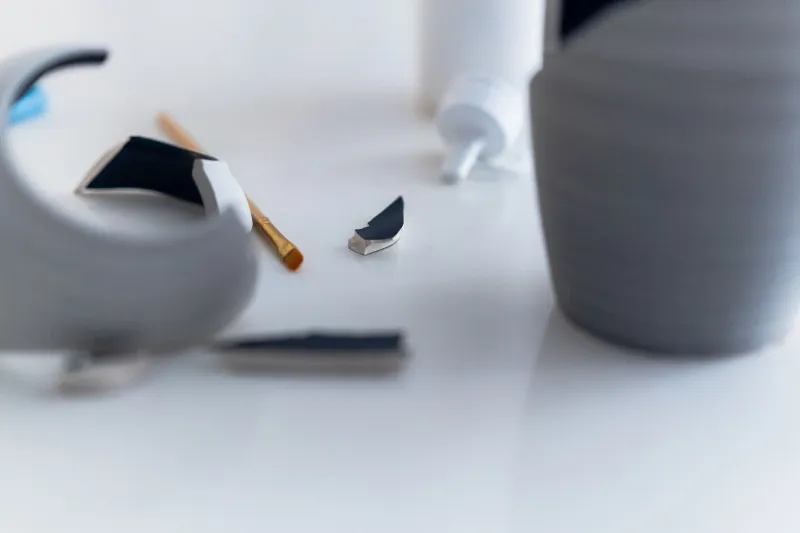
There's a ceramic mug sitting on a shelf in my kitchen that I probably should have thrown out two years ago. The handle snapped clean off during a move from Chicago, and for a long time it just sat there — half useful, fully symbolic of everything I'd left behind. I kept meaning to toss it. I never did.
Then I stumbled across kintsugi, and suddenly that busted mug started to look a lot different.
What Kintsugi Actually Is
Kintsugi — roughly translated as "golden joinery" — is a Japanese art form that dates back to the 15th century. The practice involves repairing cracked or shattered pottery using lacquer mixed with powdered gold, silver, or platinum. The result isn't a hidden repair. It's the opposite. The golden seams run boldly across the surface, announcing exactly where the break happened and making no apologies for it.
The philosophy behind it is rooted in wabi-sabi, the Japanese worldview that finds beauty in impermanence and imperfection. Rather than disguising damage, kintsugi frames it as part of the object's story — proof that it has lived, been used, and survived something.
That's a pretty radical idea in a culture that tends to throw things away the moment they stop being perfect.
The American Habit of Starting Over
Here in the US, we have a complicated relationship with broken things. On one hand, we love a good comeback story — the underdog who rebuilt from nothing, the friendship that survived a falling out, the couple who made it through a rough patch. We genuinely root for resilience.
But in practice? We're also a culture that upgrades constantly. New phone, new apartment, new circle of friends after a falling out. When something cracks — a friendship, a family relationship, a partnership — the reflex is often to quietly let it dissolve rather than do the messy, uncomfortable work of repair.
Kintsugi pushes back on that instinct hard.
Relationships Have Fault Lines Too
Think about a relationship in your life that fractured somewhere along the way. Maybe it was a friendship that went cold after one of you moved, or a sibling dynamic that got weird during a hard family stretch, or a romantic relationship that ended but left behind a strange, unresolved grief. Most of us have at least one of these.
The kintsugi approach asks a genuinely countercultural question: What if the break isn't the end of the story?
In pottery, the crack reveals where the object is structurally vulnerable. In relationships, conflict and distance do the same thing — they expose the fault lines, the places where communication broke down, where needs went unmet, where two people's expectations quietly diverged. That's painful information. It's also incredibly useful information, if you're willing to work with it.
Repairing with gold means acknowledging the damage openly instead of pretending the fight didn't happen, the silence didn't stretch for months, or the hurt didn't run as deep as it did. It means saying, this broke, and here's where, and here's how we're going to make it whole again.
What the Repair Actually Looks Like
Kintsugi isn't a quick fix — the lacquer process takes time, patience, and multiple layers. Real relationship repair works the same way. A single conversation rarely does it. But there are a few principles from the art form that translate surprisingly well.
Don't hide the seams. Glossing over what happened — skipping straight to "we're fine now" without actually processing the break — is the equivalent of painting over a crack with the same color. It might look okay from a distance, but it won't hold. Name what happened. Let it be named.
The repair becomes part of the story. One of the most freeing ideas in kintsugi is that the mended version of the object isn't a lesser version — it's a more complex, more interesting one. The same is true for relationships that have been through something real. A friendship that has survived a genuine conflict often has a kind of depth and trust that newer, untested friendships simply don't.
Not everything can or should be repaired. This is the part of the metaphor that gets glossed over sometimes, but it matters. Some pottery is too shattered to reassemble. Some relationships have broken in ways that make repair genuinely harmful. Kintsugi isn't an argument for staying in damaging situations — it's an argument for not giving up on things worth keeping, and for doing that work with honesty rather than avoidance.
The Gold Is the Point
What stops most people from attempting repair — whether of a bowl or a bond — is embarrassment. The crack is visible. Everyone can see it happened. There's something that feels exposed and vulnerable about a relationship that has clearly been through something.
Kintsugi reframes that exposure entirely. The gold doesn't whisper about the damage. It announces it. And in doing so, it transforms the crack from a flaw into a feature — evidence of survival, of care, of the decision that this thing was worth saving.
That shift in perspective is genuinely hard to achieve, especially in a culture that prizes seamless presentation. But there's something quietly powerful about a friendship or a family relationship that has been visibly, honestly repaired. It signals a kind of commitment that perfect, unbroken things can't quite communicate.
Back to the Mug
I ended up reattaching the handle with epoxy — not gold lacquer, not the real kintsugi process, but something in the spirit of it. It's a little crooked now. You can see the seam if you look. I use it every morning.
I also sent a long-overdue text to someone I'd let drift out of my life after a misunderstanding that neither of us ever fully addressed. That conversation was harder than fixing the mug. It was also, eventually, a lot more valuable.
The Japanese concept of kintsugi is ultimately about one thing: deciding that history adds value rather than subtracting it. That something — or someone — that has been through a break and come out the other side is not diminished by what happened, but deepened by it.
That's a philosophy worth borrowing, wherever you happen to be doing your living.