You Are Enough: What Japanese Visiting Culture Says About the Pressure to Always Bring Something
There's a particular kind of stress that hits right around the time you're grabbing your keys to leave the house. You're headed to a friend's place — maybe they just had a baby, maybe they're going through a rough patch, maybe it's just a casual Sunday dinner — and suddenly you're standing in the middle of your kitchen wondering: Should I bring wine? Flowers? A candle? Something from that bakery down the street?
For a lot of Americans, showing up without something in hand feels almost rude. Like you didn't try hard enough. Like you didn't care enough. The gift, the bottle, the dish — it becomes a kind of social currency. Proof of effort. Proof of love.
But spend any time learning about Japanese visiting customs, and you start to notice something quietly radical: the idea that your presence, on its own, might actually be the point.
The Weight We Put on What We Carry
American hospitality culture is generous, and that's genuinely beautiful. We bring casseroles to grieving families. We show up to housewarming parties with houseplants and scented candles. We would never dream of attending a dinner party without a bottle of something tucked under one arm.
But somewhere along the way, the gesture can start to overshadow the visit itself. The focus shifts from being there to what you brought. And when that happens, the relationship — the actual human connection you came to nurture — gets a little lost in the transaction.
This is where Japanese visiting culture offers a genuinely different lens.
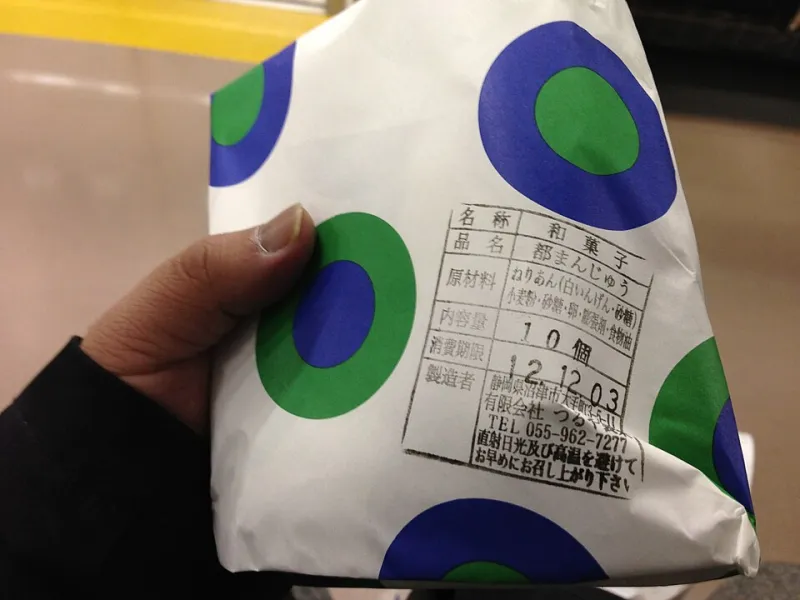
In many Japanese social contexts, particularly in more traditional or rural settings, the expectation around bringing gifts is highly ritualized — but it's also deeply intentional. Gifts, when they are given, carry specific meaning tied to the season, the relationship, and the occasion. They're not improvised. They're not obligatory filler. And crucially, there are plenty of visits where the expectation isn't a gift at all. What's expected is you — your full attention, your calm presence, your willingness to simply be in the room with someone.
Presence as a Practice
There's a concept woven throughout Japanese social life that doesn't translate neatly into English, but it shows up in the way people sit with each other during hard times. It's less about doing and more about being. Less about filling silence and more about honoring it.
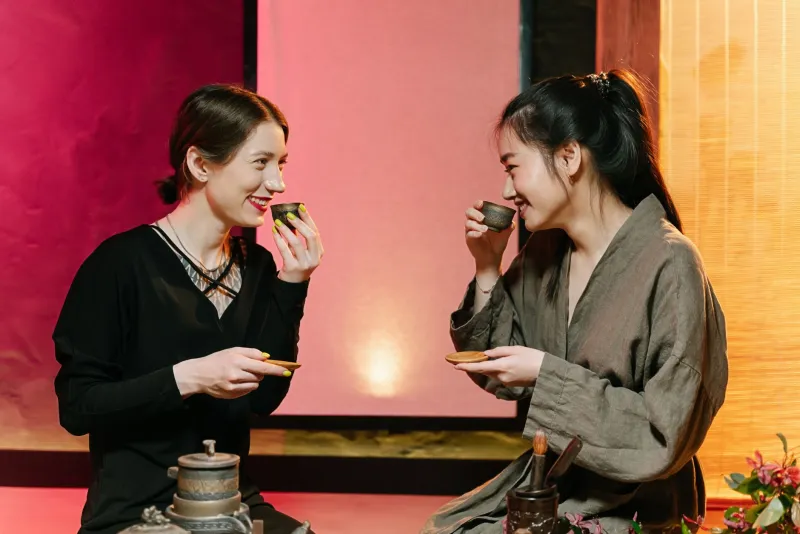
When a friend is grieving in Japan, it's not uncommon for someone to visit and say very little. To sit. To make tea. To stay. The comfort isn't delivered in a basket of muffins or a sympathy card — it lives in the quality of the attention you bring. In the fact that you came at all, and that you came without an agenda.
For Americans raised on the idea that helpfulness looks like action — bringing things, fixing things, saying the right things — this can feel almost uncomfortably passive. But that discomfort is worth sitting with. Because what it points to is a deeply different understanding of what it means to support someone.
Showing up empty-handed, in this sense, isn't a failure of effort. It's a different kind of effort. It's the effort of clearing away everything that might get between you and the person you came to see.
What We Lose When We Make It About the Thing
Think about the last time you were going through something difficult. What did you actually need from the people around you?
For most of us, the honest answer isn't a nice bottle of Merlot or a succulent in a cute pot. It's someone who would sit on the couch with us. Someone who wouldn't try to fix it or reframe it or rush us toward feeling better. Someone who could just... be there.
The gift, the gesture — it can be a beautiful way of saying I was thinking of you. But it can also become a way of keeping emotional distance. A way of feeling like you've done your part without having to actually show up in the harder, quieter way.
Japanese visiting culture, at its best, strips that option away. It says: the relationship is the point. You are the offering.
How to Bring This Into Your Own Life
None of this means you should stop bringing wine to dinner parties. American hospitality has its own warmth and meaning, and there's real joy in the ritual of it.
But there are moments — especially when someone is struggling, or healing, or just needs company — where you might try loosening your grip on the idea that you need to arrive with something.
Ask before you assume. Before a visit to someone who's going through a hard time, try asking what they actually need. Sometimes it's a meal. Sometimes it's just a warm body on the other side of the couch.
Let the visit be the thing. Resist the urge to fill every moment with activity or conversation. Comfortable silence is a skill, and it's one worth practicing.
Notice when the gift becomes armor. If you find yourself anxious about what to bring, it's worth asking whether the anxiety is really about the gift — or about whether you, on your own, are enough.
Stay a little longer than feels comfortable. One of the quiet lessons from Japanese visiting culture is that presence takes time. A 20-minute drop-by with a candle isn't always the same as an hour of unhurried company.
The Moment You Walk In
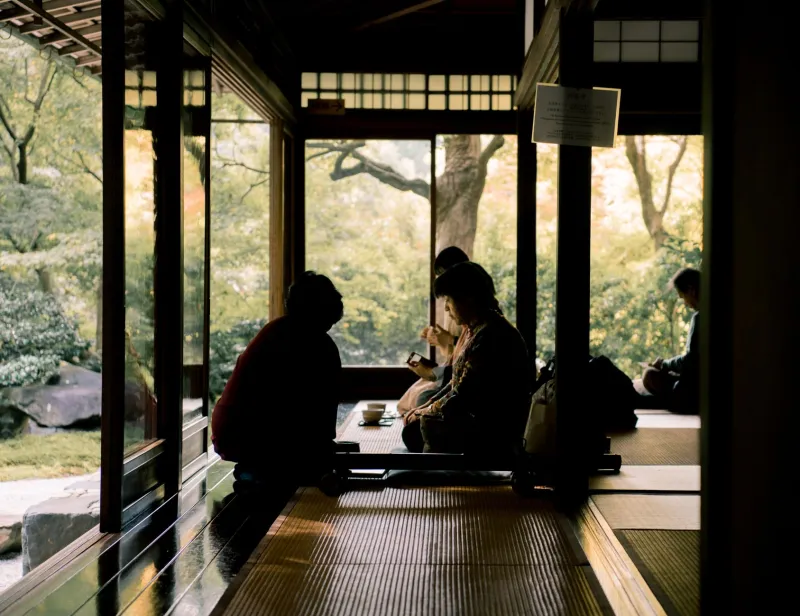
There's something that happens in the moment you arrive at someone's home — before you've said anything, before you've handed over whatever you brought. There's a split second where it's just you and them, and the fact that you came.
That moment is easy to rush past. But it's also where the real visit lives.
Japanese culture, in its quieter ways, has always known this. The tea isn't the point. The gift isn't the point. The person sitting across from you — the one who opened the door when you knocked — that's the whole point.
Maybe next time, you can let yourself be enough.