Your Brain Needs Boredom: What Japan Quietly Knows About Doing Absolutely Nothing
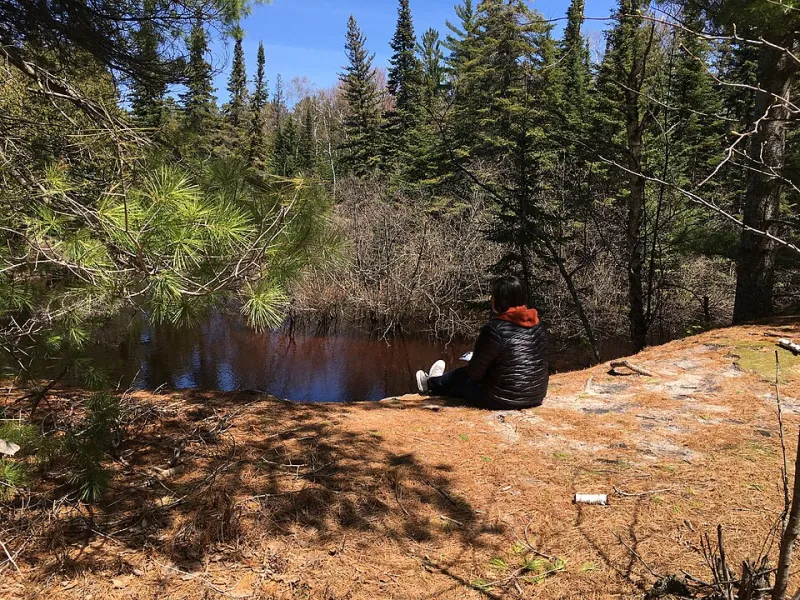
Photo: NPS, Public domain, via Wikimedia Commons
Somewhere between your third podcast episode of the morning and the productivity app reminding you to "crush your goals," a small but significant question gets buried: what if you just... didn't?
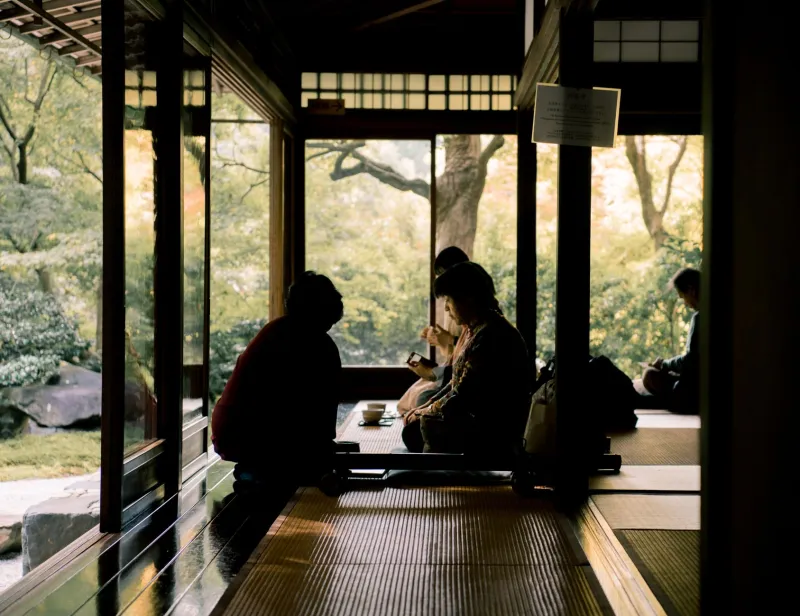
Not in a giving-up kind of way. Not in a Netflix-binge-until-2am kind of way either. But in the way of sitting by a window with nothing particular in mind, letting your thoughts wander like clouds over a mountain you're not trying to climb.
Japan has a word — or rather, a concept baked into its cultural DNA — for exactly this kind of time. 余暇 (yoka) refers to leisure in its most unhurried form: unscheduled hours that aren't optimized, monetized, or turned into a side hustle. It's time that simply belongs to you, with no deliverable at the end.
And if you've ever felt vaguely guilty for doing nothing on a Sunday afternoon, this one's for you.
The Hustle Tax We're All Paying
America has a complicated relationship with rest. We celebrate the grind. We romanticize the 5am wake-up call and the packed calendar. "Busy" has become a status symbol — shorthand for important, needed, alive.
But there's a cost. Burnout rates in the US have been climbing for years, with surveys consistently showing that workers feel exhausted, creatively tapped out, and disconnected from the things that actually matter to them. We fill every gap — the commute, the lunch break, the ten minutes before bed — with input. Scrolling, listening, watching, producing.
The irony is that all this stimulation isn't making us sharper. It's making us tired in a way that sleep can't fix.
What Yoka Actually Looks Like
In Japan, particularly in smaller towns and the quieter prefectures of the Tohoku region, there's a different rhythm to free time. An older man might spend an hour tending to a single bonsai tree — not to photograph it, not to post it, just to be with it. A group of women might sit in a garden after lunch, talking about nothing in particular, or saying nothing at all.
This isn't laziness. It's a culturally embedded understanding that the mind needs unstructured time the way the body needs sleep. Yoka isn't the absence of activity — it's the presence of ease.
There's also a related idea worth knowing: boketto (ぼけっと), which describes the act of gazing vacantly into the distance with no particular thought in mind. The Japanese don't pathologize this. They don't reach for their phones to fill it. They let it happen, and they let it be enough.
What Neuroscience Actually Says
Here's the thing: the science backs this up completely, even if American culture hasn't caught up yet.
When your brain isn't focused on a task, it activates what researchers call the default mode network — a system that handles things like self-reflection, empathy, creative problem-solving, and memory consolidation. In plain terms, your brain does some of its most important work precisely when you think it's doing nothing.
Those shower thoughts that suddenly crack a problem you've been stuck on for weeks? That's your default mode network. The random connection between two unrelated ideas that turns into your best creative work? Same thing.
But here's the catch: it only kicks in when you stop feeding your brain constant input. The moment you pick up your phone, queue up a podcast, or open another browser tab, you interrupt the process. You're essentially blocking your own best thinking.
Japan's cultural permission to sit quietly, to gaze out a window, to let the afternoon pass without agenda — it's not a quaint tradition. It's neurologically sound.
The Guilt Is the Problem
For most Americans, the biggest barrier to embracing yoka isn't time. It's the feeling that accompanies it.
We've been conditioned to treat stillness as a warning sign. If you're not moving, you're falling behind. If you're not producing, you're wasting. Rest is something you earn after you've worked hard enough — and somehow, that threshold never quite arrives.
This is worth sitting with (pun intended). The guilt you feel when you're doing nothing isn't a character flaw. It's a cultural script you've been handed, and you're allowed to put it down.
Japanese culture doesn't frame leisure as a reward for productivity. It frames it as a basic condition of being human. The two things coexist — work and rest, effort and ease — without one needing to justify the other.
Small Ways to Let Yourself Be
You don't need to move to the Japanese countryside to reclaim this. You just need to start small and resist the urge to make it into a wellness routine (which, let's be honest, is just productivity in a face mask).
Try leaving one morning a week with no agenda. Not "self-care Sunday" with a list of restorative activities. Just... open time. Sit outside if you can. Let yourself be bored. Notice what surfaces.
Or try boketto on purpose. Find a window, a porch, a patch of sky. Look at it without trying to think about anything in particular. Give it five minutes. See what happens.
The point isn't to achieve a state of zen. The point is to stop treating your mind like a machine that needs to be running at full capacity every waking hour. It doesn't. And when you give it room to breathe, it tends to give something back.
The Moment Is Enough
There's something quietly radical about a culture that builds rest into its philosophy of living — not as a luxury, not as a treat, but as a natural part of the day. The Tohoku region of Japan, known for its unhurried pace and deep connection to seasonal rhythms, embodies this particularly well. Life there moves in a way that makes space for the in-between moments, the pauses, the afternoons that don't add up to anything except having been lived.
That's worth something. Maybe more than we've been willing to admit.
So the next time you catch yourself doing nothing and feel the familiar pull of guilt — the urge to be productive, to optimize, to fill the silence — consider the possibility that you're not wasting time.
You might just be using it exactly right.